Why AI Can't Replace Life Design for Mid-Career Transitions
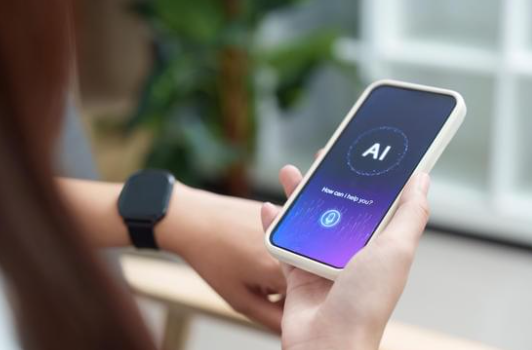
Something funny happened to me the other day. I was on LinkedIn last week checking my messages like I usually do, and I noticed a really interesting note from a woman who was a PhD candidate specializing in AI, currently working as a career coach. She was trying to connect with me to pitch me her new AI coaching tool that helps place people in the perfect job or career - without the exploration. Yes, you heard that. An app that will ask you a set of questions, assessments, and quizzes, all while using artificial intelligence to help you arrive at the career of your dreams. No headache or grunt work needed. Out of curiosity, I skimmed over the website summary about the app, alternating between shaking my head in amazement to laughing out loud. Finally, I decided to hop off of LinkedIn and put my laptop away. I had enough amusement for one day.
Let me tell you why people get life design all wrong and what it takes to really make it work.
Life Design IS Experienced-Based

Let’s get one thing straight… Life Design is not meant nor designed to be commoditized and packaged into an app. That’s just not how it works, nor is that the intent or purpose of the framework. Life Design (especially when focused on the career aspect) is meant to be experienced fully in the physical sense, not passively sitting at a computer or scrolling mindlessly through an app. To put it lightly, it’s an experience-based process: you have to actually live it, test it, try it, and feel it. It requires a hands-on immersive approach AND it’s most impactful when you can experience it with others - just like life is meant to be communal or shared, not lived in isolation.
I say this because no amount of tests, assessments, or quizzes can perfectly determine what will or won’t work for your professional life. If that were the case, everyone would find their dream job straight out of college after taking a simple career planning course and we’d all live happily ever after. But life just doesn’t work that way. Until you experience certain aspects of a job or career (through hands-on experimentation or exploration), you simply won’t know if it’s for you. As humans, we’re all very different when it comes to our backgrounds, values, expectations, religions, education, personal and professional experiences, etc. You can’t put us all in one box and we’re certainly not robots. We’re far too diverse and unpredictable in our nature and internal makeup that no artificial intelligence could assign us the perfect career without fault. It’s just not going to happen.
Life Design is NOT Transactional

Life design is a relationship and a process, not a one-time output. You can’t just simply enter data into a field, read the output, and accept the answer. This isn’t mathematics, but there is a real science to life design. From the peers you meet in the life design group coaching program to those you meet during exploration, those conversations and activities are worth their weight in gold.
When you engage with others, it goes beyond just a simple introduction, it’s about making and sustaining those relationships, and considering their insight and feedback to help influence your career decisions. Their perspectives help to challenge your viewpoints to either think outside of the box or consider other avenues you may not have given thought to. As important, life design requires a thinking partner or guide — someone who can relate to you, understand the nuances in tone, speech, and connect with you to help you reflect back what you can't see yourself. This person also serves to help you remain accountable. Are you doing the work that you should be? Have you hit a roadblock? What did you discover or have to share? An app can't hold you to anything or call you out when you're self-sabotaging or lagging. I don’t care how impressive the notifications and chatbot are. The limitations are real. Either way, the communication, rapport, and interaction with OTHERS is what makes the process so powerful. Not sitting in a silo scrolling through modules on an app.
Life Design is NOT Linear

Lastly, life design doesn't follow a logical algorithm, it follows a human being who changes their mind, discovers new things, and needs to pivot. AI may be able to give you data, but it can't help you figure out who you actually want to become or the perfect path to pursue. There is no shortcut or magic potion for finding that out.
Life doesn’t give us specific steps or a blueprint to follow. In fact, that notion is what got us in this mess in the first place. The assumption that following the status quo (i.e. go to school, get into a good college, find a good job) was all we needed to do, not accounting for anything else (who we were at 25 isn’t the same at 45, job sectors changing, work preferences, or what we deem a “good fit”). It’s really identity work through information-gathering, but not in an algorithmic sense. Besides, the world is constantly moving and evolving so rapidly, it’s impossible to keep up with other variables that impact your career decisions. You’d have to take into account the current work environment (physical and social), industry changes, tasks, skills, etc. Nothing is stagnant. Everything is changing.
Just like us.
Conclusion
Now, AI is what it is. It’s being embedded into every fabric of our lives (whether that’s good or bad or you want to accept it or not). It can bring some value depending on what you’re doing.
BUT. I do not advocate for its use in my coaching. I’ll let other coaches speak for themselves.
So, when someone asks me, “do you use AI in your coaching program?” I’ll give a cute little response and say: “Sure, it’s AI - All In-Person, All Interactive, or (my personal favorite) Absolutely Individualized. If you’re referring to artificial intelligence, absolutely not, and I have no plans of integrating it any time soon.”
I believe when it comes to something so sacred and personal as coaching, that’s something only a human needs to be involved in. Trying to condense a life design program into an app isn’t the right move. Directors and VPs aren't making a $9.99 decision, they are making a life decision that affects income, identity, family, and future. The stakes are far too high to leave it up to an app that is charging the same amount for a subscription to a music streaming service to dictate your future.
It’s simply not smart or strategic.