What is Life Design Coaching?

Pop quiz: What do you do when you’re burned out, REALLY want to leave your job, BUT the job market is unstable?
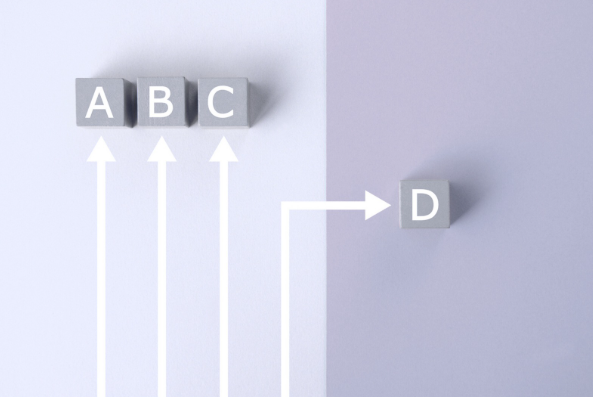
Do you:
A) Stay put and wait for things to get better
B) Panic-apply to any and everything that’s available to escape your situation or
C) Pray for a magical intervention?
The real answer is actually D (none of the above).
Trick question, I know. I know.
But hear me out for a minute.
None of the options listed above will serve you well in the long-term if you’re emotionally, financially, and physically drained of your job. Even if you’re not at the point of total despair, but simply ready to make a major career pivot, it’s hard to make a decision when there’s so much uncertainty in the air.
Luckily, you have options, whether you know it or not. In this post, I’m going to introduce you to a little-known career alternative called life design to help you make the best move for yourself.
In this post, we’ll define what life design is, little misconceptions, and how to determine if it’s the right approach for you.
What is Life Design?
Life design is all about shaping your life intentionally rather than letting life happen to you. Instead of reacting to circumstances or following someone else's guidelines, life design helps you make deliberate choices across the areas that matter most: career, relationships, finances, health, and personal fulfillment. When applied through the lens of the career aspect (and the Life Design with Nelle approach), it's about asking "What do I actually want?" and then building a plan to get there. For those who are mid-career professionals (typically 30s/40s with more than 15-20 years experience), it’s one of the most underutilized ways to chart a new path without throwing caution to the wind. So now that you know a little bit about life design, let’s talk about how jumping into another career without strategic planning can put you on a path to derailment.
Why Reactive Career Moves Fail in Tight Markets

We as people are emotional by nature. That’s a given. It’s just a part of being human.
The problem is when we don’t keep our emotions in check and operate out of a place of desperation. That’s when the trouble starts. When you’re ready to get of your job by any means necessary, your first instinct is to throw caution to the wind and start panic-applying.
And you know exactly what I’m talking about. You put in 2 or 3 industry keywords, and start mass applying to everything in sight on a coffee-fueled typing spree. Doesn’t matter the location, job title, or details. If there’s a company hiring, you’re all in. But when you resort to this kind of behavior, you’re really just trading one set of problems for another - a misaligned role you had no business applying for in the first place.
But deep down you KNOW something’s gotta give because the cost of staying isn’t worth it either. When you overstay your time in a job that no longer suits you, it deepens the burnout and makes you less competitive when you finally do leave. And every year you keep talking yourself out of walking away, the gap between what you're worth and what you're paid grows wider.
According to Zippia, employees who change jobs see average salary increases of 14.8%, while those who stay put see just 5.8%. Again, being burned out doesn’t just hit you emotionally, it hits that wallet too.
The other piece of the puzzle that holds mid-career professionals back is listening to traditional career advice, which inevitably makes everything worse. Traditional career coaches are great, don’t get me wrong. They provide an excellent service, but their tactics are mainly reactive - optimize your LinkedIn, practice your interviewing skills, rework your resume. That’s all good and fine, but they assume the problem is that you’re not good enough at job searching for the career you want. The real problem? You don't have clarity on what you're actually searching FOR. Tactics without strategy just create more noise in an already crowded market and puts you on a path toward more confusion and frustration.
What you actually need: In a tight job market, you can't afford to waste time or energy on poorly aligned opportunities. You need to embrace a blueprint that supports exploration, testing, learning and deciding - quickly.
This is where life design can help you and how it works best.
Why Life Design Works for Career Transitions

Life design doesn’t follow the traditional steps of “career advice”: choose a goal, make a 5-year plan, and execute. That type of advice is highly linear with the focus of following one path, and one path only. It’s all about planning, planning, and more planning. You end up spinning your wheels - planning to “get ready” but delaying execution. But with life design, you’re focused on figuring out your next move as quickly as possible through trial and error - experimentation and testing. You also might find more than one suitable path to take in the process. And this approach works well when you’re trying to transition into a new career or pursuing something entirely different. I’ll give you a few reasons why.
For one, you’re reducing your risk by testing before committing to any decision. You’re not abandoning your current job at a moment’s notice to chase a new career without evidence it’s the right fit for you.
With the life design approach, you’re also not spending thousands of dollars on a new venture or pathway unless you get validation it’s the right next step. Take for example the thousands of mid-career folks going back to college because they can’t find a job. It sounds good in theory, but is that really the best course of action for each individual? Only if you’ve done the work to find out. Otherwise, this becomes a costly mistake that will haunt you for years.
On the bright side, you’re building confidence based on experience and not “hope” or a “hunch.” It’s tangible information you can use to move forward and find out what IS a fit for you and every piece of data you collect is invaluable in your decision-making.
3 Common Misconceptions About Life Design

Now that you know a little bit more about how life design can work for you (and how I do it at Life Design with Nelle), let’s talk about what it is not and a few false beliefs people have about it.
Misconception #1: "This is manifestation/positive thinking"
Reality: It's data-driven and action-based.
Now before you start thinking to yourself, “Is this some type of woo-woo coaching?” It’s far from it. Life Design isn’t based in positive psychology and it’s definitely not generalized life coaching. We’re not here to break down obstacles, emotional barriers, or manifest possibilities and while doing these things are very beneficial on a personal level, that’s not what life design is about. We’re here to make data-driven decisions based on experiential trials.
Misconception #2: "I don't have time for this"
Reality: It works alongside your current job.
When you’re in the midst of trying out different paths, you are in control of the time you invest. This isn’t about taking PTO so you can go sit in a hut in Tahiti (unless you want to of course) because you want a lifestyle change. It’s all about flexibility and leaning into a schedule that works for you - whether it’s on the weekend, evenings, or whenever.
Misconception #3: "I'm too established to change"
Reality: You're not starting over, you're simply redirecting your focus strategically.
I understand that you’ve been in the corporate game for years. You might have 20+ years under your belt in your respected industry and feel like you can’t take a gamble. Not when you have a million and one obligations. Or, you might feel like it’s too much to simply “start over” and “rebrand.” Luckily, with life design you don’t have to. It’s more of a redirection than a total reinvention (unless you want it to be). You don’t have to burn everything down to make it work. You can start where you’re at and work with what you’ve got. That’s the beauty of it.
Is Life Design Right for You?

Life Design looks different at different career stages. What works for someone just starting out is fundamentally different from what mid-career professionals need.
Life Design may be a good fit if:
You are ready to leave your job, but hesitant in a tight job market
You are in a mid-career trap, feeling stuck and uncertain of your next move
You are open to designing more than just a career, maybe a business or new lifestyle
You're willing to think differently about career transitions
It may not be the best fit if you’re:
In immediate need of employment (it’s a process, not job placement)
You’re looking for someone to tell you what to do (you are the one making the decisions, the coach is simply the guide)
Again, this isn’t a comprehensive list, but it’s a good indication of whether pursuing the life design route is worth it for you (as well as my 5-point self-assessment).
Next Steps
And honestly, if you've read this far, something must have resonated with you. Maybe you're feeling stuck, underappreciated, or you’re just flat out tired and you’re ready to try something new. If that is the case, I’d be more than happy to talk to you. I work with directors and VPs who are ready to throw in the towel after the corporate grind, but need some guidance on what that next move might look like. If that's you, book a free discovery call and we'll figure out if this approach makes sense for you.